


Bulldozer Master: Crush & Mine
Supercent, Inc.
I went into Bulldozer Master: Crush & Mine expecting a quick arcade distraction, and that is exactly where it makes its strongest first impression. The idea is immediately understandable: take control of heavy machinery, break through obstacles, and turn destruction into progress. There is no complicated premise to learn before the fun starts, which makes it an easy game to open when I have only a few spare minutes.
What makes the opening appealing is the physical feel of the task. Moving a bulldozer through a space and watching barriers give way is more satisfying than tapping through an abstract score counter. The game, developed by Supercent, Inc., belongs firmly to the arcade category, but it borrows some of the relaxing appeal of a destruction simulator. I can play without needing a long explanation, and the basic loop is clear enough to understand almost immediately.
That simplicity is also the reason I would recommend it cautiously rather than universally. Its best quality is instant accessibility, not deep strategy. If you want a game that provides a short burst of mechanical action, it has a good chance of fitting your routine. If you are searching for a detailed construction simulation, a demanding driving game, or a progression system that constantly surprises you, the lightweight arcade design may feel thin after the novelty wears off.
What the first week feels like
During the first few sessions, the destruction theme does most of the work. I enjoy the contrast between the large machine and the simple objective: keep moving, clear what is in the way, and collect the rewards that make the next attempt feel worthwhile. This is the kind of game I can imagine playing while waiting for an appointment or taking a short break from work. It does not ask me to remember a story, manage a large roster, or study complicated controls.
The free entry point helps the game find its audience. It is listed as free, carries an Everyone age rating, and supports devices running Android 6.0 or later. Those details make it approachable for families and casual players, although younger users should still be aware that optional in-app purchases range from $0.49 to $99.99 per item. I would treat the purchase system as something to review before handing the phone to a child, rather than assuming that a free download means a completely purchase-free experience.
Related News






The early appeal comes from the direct relationship between action and result. When I operate a bulldozer in a game like this, I want the machine to feel useful right away. A slow introduction filled with menus would work against the fantasy, while a straightforward start supports it. The central activity is easy to understand even for someone who does not normally play arcade games, so this is a reasonable choice for a friend who wants something uncomplicated.
One practical tip is to play the opening sessions with a specific time limit instead of letting the game become an automatic scrolling habit. The short-session format is one of its strengths, but that same convenience can make it easy to open repeatedly without deciding whether I am actually enjoying the current stage. I found the game more pleasant when I treated each session as a small task rather than expecting it to provide a full evening of entertainment.
The store summary presents it as a destruction simulator centered on demolishing and mining, while the short description calls it “Bulldozer Master.” Those labels set the right expectation: this is about the satisfaction of operating a powerful machine, not about realistic industrial work. Players who understand that distinction will probably enjoy the first-week rhythm more than players expecting a serious equipment simulator.
Gallery
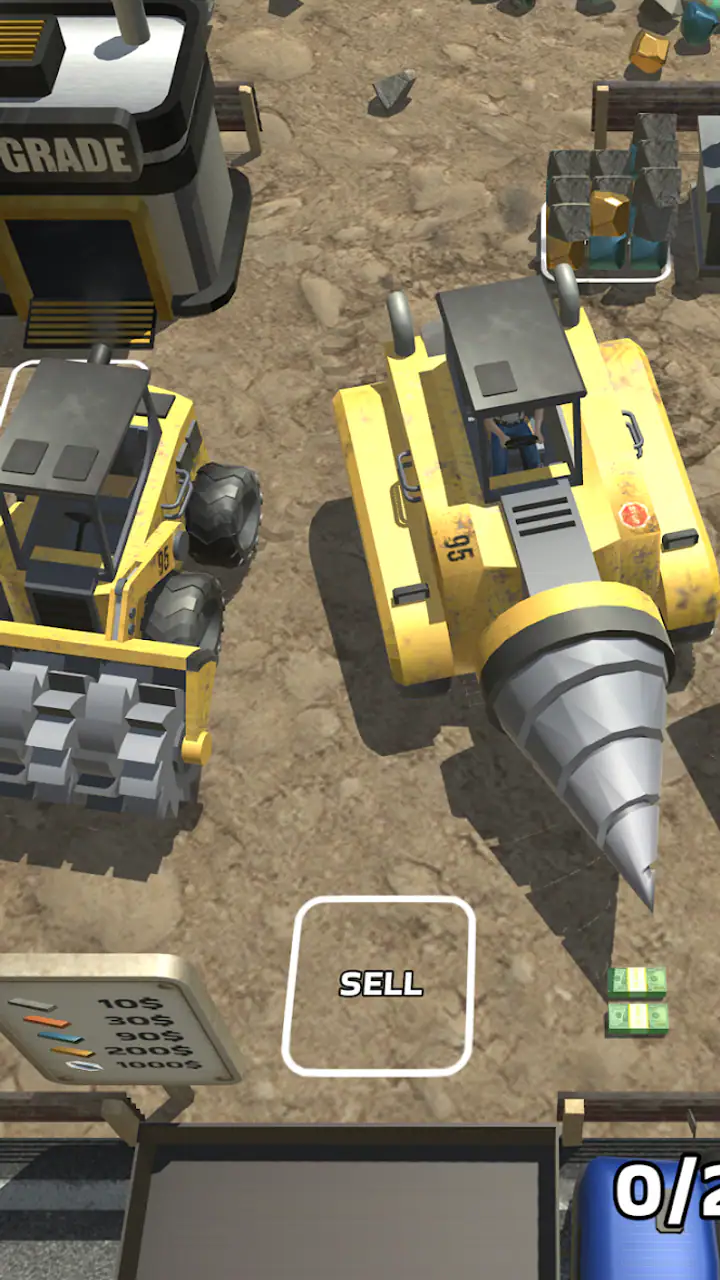
Where the simple design works
The game’s strongest design decision is that the fantasy can be understood without much reading. I do not need to learn a complicated economy before I can appreciate the appeal of clearing material. That makes it especially suitable for casual players, younger audiences, or anyone who prefers games that communicate through movement and visible results.
It also works well as a shared recommendation. I could hand it to someone who rarely plays mobile games and explain the basic idea in a sentence. That is a genuine advantage over more elaborate arcade alternatives, where the first few minutes are often spent learning menus, characters, abilities, or event rules. Here, the machine itself is the attraction.
There is a useful trade-off in that accessibility. Because the main pleasure comes from repeating a familiar action, the game does not have to be mentally demanding to be enjoyable. However, the same repetition can expose its limits quickly. If the environments, objectives, or rewards do not keep changing in meaningful ways, the bulldozer can begin to feel like a tool I am operating out of habit rather than curiosity.
Does it have month-to-month value?
The more important question is not whether the game is fun during the first few days. It is whether I still have a reason to return after the basic destruction loop has become familiar. My answer is that its long-term value depends heavily on how comfortable I am with repetition. Players who enjoy incremental arcade progress may keep finding the routine relaxing, while players who need new mechanics or stronger competition will probably move on sooner.
Compared with a traditional puzzle game, this offers less emphasis on planning several moves ahead. Compared with a racing game, it is less about speed, precision, and competing against a track. Compared with a full construction or farming simulation, it gives me less reason to think about a larger operation. Its niche is the satisfying middle ground between toy-like machinery and casual progression, and that niche can be appealing precisely because it avoids pressure.
I would use it month to month as a decompression game, not as my main mobile game. After a busy day, a simple destruction task can be easier to enjoy than a competitive match that demands concentration. A realistic routine might be opening it during a commute break, completing a short run, and closing it before the session starts competing with more important tasks. That is recurring value, but it is modest value: the game earns a place as a small habit, not necessarily as a centerpiece.
The current version is 10.0.0, and the game has reached over 100,000 installs with an average rating of 4.4 from around 10,000 ratings. Those figures suggest that the straightforward concept has found a substantial casual audience. I would not interpret that popularity as proof that every player will enjoy it for months, but it does support the idea that the basic loop is easy for many people to pick up.
One way to test its staying power is to ask whether I am returning for the activity itself or only for the next reward. If the bulldozer movement and destruction remain satisfying, the game can continue to work as a relaxing break. If I am opening it only because a progress bar is unfinished, the experience may already be entering its maintenance phase, where the habit takes more effort than the entertainment gives back.
Who should keep it installed?
I think it is a good fit for people who like casual arcade games with a clear physical theme. It is also suitable for players who prefer short, low-pressure sessions and do not want a complicated narrative. Someone looking for a game to share with a child may appreciate the Everyone rating and the easy-to-understand premise, but I would still keep an eye on optional purchases and make sure the device’s purchase controls are appropriate.
It is less suitable for someone who wants realistic bulldozer controls, detailed terrain management, or a deep mining economy. The title may suggest a professional machinery experience, but the arcade framing matters more than realism. I would also steer competitive players toward a game built around direct multiplayer contests, rankings, or precision challenges if those are the reasons they play mobile games.
Players who dislike repeated upgrade loops should be especially selective. The initial destruction fantasy cannot carry every session forever. Before spending money, I would play long enough to see whether the ordinary movement and clearing remain enjoyable without needing a purchase to make progress feel worthwhile. That small test is more useful than judging the game entirely by its first exciting run.
Maintenance, friction, and the reasons fatigue appears
The maintenance burden is fairly low in the everyday sense: I can understand the premise quickly, return after a break, and resume without rebuilding a complicated mental model. That makes it easier to keep installed than a strategy game that requires regular attention. I do not need to schedule a long session to get anything from it, which is valuable for a casual game.
Still, “low maintenance” does not mean “effortless forever.” Any game built around a repeated action has to keep that action feeling rewarding. With this one, the main maintenance task is deciding when the loop is still serving me. If I begin opening it automatically, spending more time watching progression than enjoying the machinery, or feeling that each run is indistinguishable from the last, uninstalling it may be more sensible than forcing a daily habit.
The purchase range is another point where I would be deliberate. Small optional items can appear harmless, while larger purchases can change the way I evaluate progress. I prefer to decide in advance whether I am willing to spend anything and what kind of value I expect in return. For a game I mainly use in short bursts, I would be reluctant to make a large purchase unless I had already confirmed that it had lasting appeal in my own routine.
There is also a subtle attention trade-off. Destruction games can feel productive because every obstacle removed looks like visible progress. That can make an ordinary session feel more rewarding than it actually is. My practical approach is to use it as a timed break and avoid treating completion as an obligation. This keeps the game in its strongest role: a small arcade toy rather than another task list on my phone.
Fatigue is most likely to come from predictability. The first time I clear a large obstacle, the action has novelty. After many similar actions, I need either a fresh goal or a stronger reason to care about the next one. If the game’s progression does not keep my attention, the bulldozer’s weight and visual destruction stop being enough on their own. That is not a flaw unique to this title, but it is particularly important here because the central idea is so focused.
Three ways I would get more from it
First, I would separate relaxation sessions from progress sessions. When I want to unwind, I would focus on the physical satisfaction of clearing material and stop when the activity becomes repetitive. When I want to advance, I would play with a concrete target in mind rather than drifting through several runs. This prevents the game from becoming background tapping.
Second, I would avoid judging its value by the biggest available purchase. The useful comparison is between the time I naturally want to spend playing and the cost of optional items. If I only return occasionally, free play may be the most sensible way to enjoy it. If I play consistently and understand exactly what a purchase changes, I can make a more informed decision instead of buying during a moment of excitement.
Third, I would use it as a transition game. A short session between demanding activities can work better than trying to make it fill a long evening. The uncomplicated controls help me switch off briefly, while the limited depth means I do not need to reserve hours for it. This is a specific strength that can be missed when comparing it with larger arcade titles designed for extended play.
My long-term verdict
After the first-week novelty fades, Bulldozer Master: Crush & Mine earns lasting space only if I genuinely enjoy repetition. It does not need to become a deep simulator to succeed, but it does need to remain satisfying as a compact routine. In that role, it is easy to recommend: the bulldozer theme is clear, the arcade format is approachable, and the free download lowers the barrier to trying it.
I would recommend it to a casual player who wants a simple destruction game for spare moments, especially someone who prefers visible progress over complicated rules. I would not recommend it as the only game on a phone, nor would I choose it for a player seeking realism, competitive tension, or a constantly expanding set of mechanics. Those players will likely find a more specialized alternative more rewarding over time.
The developer’s design succeeds when it treats the bulldozer as a satisfying toy. It struggles when I expect every return visit to feel meaningfully different. That distinction should guide the download decision more than the attractive premise alone. Try it for the direct mechanical pleasure, keep your purchase limits clear, and pay attention to whether you return because you want to play or because the game has become part of your routine.
For me, that makes it a pleasant, accessible arcade diversion with a reasonable chance of becoming a regular short-break game, but not an essential long-term installation. Its lasting value is personal and habit-based rather than deep or competitive. If that sounds like exactly what you want, the game is worth trying; if you need constant discovery, it is better treated as a brief stop rather than a permanent destination.
FAQs for Bulldozer Master: Crush & Mine
What is Bulldozer Master: Crush & Mine about?
Bulldozer Master: Crush & Mine is a casual construction and mining game centered on operating a powerful bulldozer. You clear obstacles, crush materials, dig through different areas, and collect resources while improving your machine. The gameplay is designed around short, satisfying sessions, making it suitable for players who enjoy simple controls, gradual progression, and the visual satisfaction of breaking through increasingly tougher terrain.
How do you play Bulldozer Master: Crush & Mine?
The main gameplay is straightforward: control the bulldozer, move around the environment, destroy objects, and gather the materials left behind. Your collected resources can generally be used to improve the vehicle’s strength, efficiency, or earning potential. As you progress, the obstacles become more demanding, so upgrading at the right time is important. The controls are accessible for beginners and do not require complicated construction-game experience.
Is Bulldozer Master: Crush & Mine free to download and play?
The game is generally offered as a free download, allowing players to start crushing and mining without paying an upfront purchase price. However, free mobile games commonly include optional advertisements and in-app purchases, such as currency, boosts, or faster upgrades. Before downloading, it is worth checking the current store listing for the exact purchase options, advertising policy, supported devices, and any age or regional restrictions.
Does the game require an internet connection?
Whether every feature works offline can depend on the version installed and the developer’s implementation. Basic bulldozer gameplay may be available without a constant connection, but advertisements, cloud-related features, updates, or purchases can require internet access. If you plan to play while traveling or with limited data, test the game in airplane mode after installation and avoid assuming that all progression or rewards will function offline.
Is Bulldozer Master: Crush & Mine suitable for children and casual players?
The game is a good fit for casual players who prefer uncomplicated controls, quick objectives, and a relaxed progression loop rather than a complex simulation. Its construction and mining theme is generally approachable, but parents should still review the store age rating, advertising content, and in-app purchase settings before allowing younger children to play. The experience may also become repetitive for players seeking deep strategy or realistic machinery controls.
Pros
- Simple controls make it easy to start playing immediately.
- Satisfying destruction effects make clearing obstacles feel rewarding.
- Short levels fit well into quick gaming sessions.
- Upgrades add a sense of progress as the bulldozer becomes stronger.
- Works well as a casual
- low-pressure game for relaxing play.
Cons
- Gameplay can become repetitive after extended sessions.
- Some upgrades may require considerable grinding to unlock.
- Ads can interrupt the experience
- especially between levels.
- Limited strategic depth may disappoint players seeking challenging gameplay.
- Performance may vary on older phones during busy destruction scenes.


